

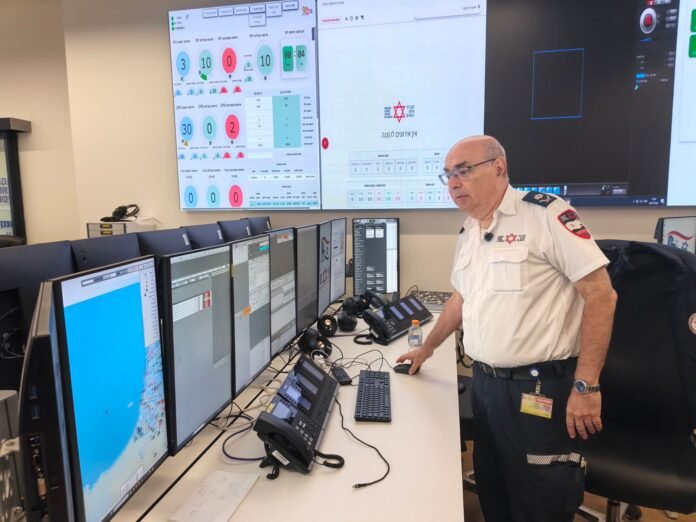

JERUSALEM, ISRAEL – The International Cooperation Coordinator at Israel’s Magen David Adom (MDA) emergency response center has declared that effective disaster management depends on a “synchronized partnership that transcends borders.
Chaim Rafalowski says that no nation, regardless of size or resources, can afford to stand alone when a crisis strikes.
Rafalowski, speaking to a 14-member delegation of West African journalists during a visit to the MDA headquarters on Monday, July 6, emphasized that emergency preparedness is not a luxury but a strategic imperative.
He underscored that Magen David Adom, Israel’s national emergency medical, disaster, and blood-services organization, recognized as an official national society by the International Red Cross and Red Crescent Movement, views regional capacity-building as a cornerstone of its international outreach.
“Disasters do not recognize passports or political boundaries,” Rafalowski stated. “When seconds separate life from death, the strength of your response depends on training, coordination, and mutual support. That is why we are deeply committed to sharing our expertise with partners around the world”.
Rafalowski revealed that MDA is eager to collaborate with other nations across a spectrum of critical areas, including ambulance fleet modernization, dispatch center optimization, mass-casualty incident management, and community-based first-responder training.
He noted that Israel’s decades of experience in handling high-pressure emergency scenarios, from rocket attacks to natural disasters and terror incidents, offer practical, battle-tested models that can be adapted to diverse contexts.
The visiting journalists, representing media outlets from across the West African sub-region, are in Israel as part of a week-long familiarization tour organized to explore the country’s advancements in politics, economics, innovation, culture, and tourism.
The delegation’s visit to Magen David Adom marks a significant milestone in Israel’s growing engagement with West Africa, as both sides explore new avenues for cooperation in public safety, health infrastructure, and disaster resilience.