


MONROVIA – The Liberian Government has reaffirmed its unwavering commitment to advancing gender equality and bolstering women’s leadership across all sectors, with a particular focus on the diplomatic corps, signaling a decisive push toward inclusive governance.
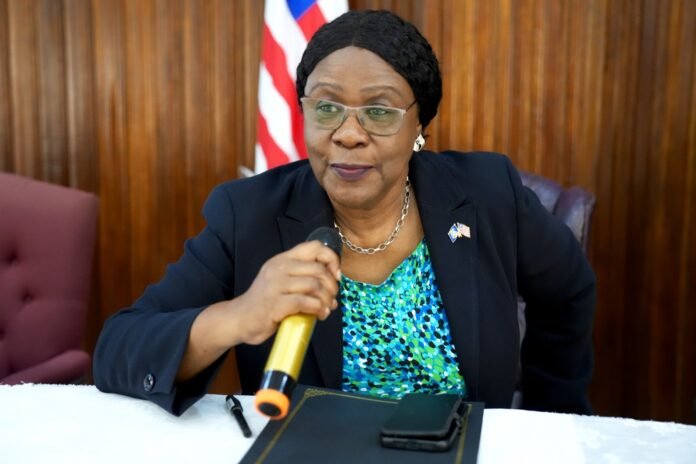
Acting Foreign Minister Ethel Davis announced on Wednesday that the administration is actively strengthening institutional frameworks to support women in foreign service.
Key measures include the expansion of gender and social inclusion units across ministries, the finalization of progressive Human Resource policies, and the establishment of a dedicated Women in Diplomacy Network to foster mentorship and career development.
Speaking on Wednesday, June 24, 2026, at a program commemorating the International Day of Women in Diplomacy, held in Monrovia, Minister Davis underscored the government’s resolve to ensure that women’s representation in international relations is not merely symbolic but structurally embedded in Liberia’s national gender policy.
She further disclosed that the Ministry of Foreign Affairs has conducted a comprehensive audit to identify gender representation gaps and is currently acting on findings to implement targeted corrective actions.
“This is not just about numbers; it is about transforming the culture of our diplomatic institutions to reflect the society we serve,” Minister Davis stated.
The event also featured a compelling address by Dr. Abul Hasnat Monjurul Kabir, Senior Global Advisor at UN Women, who called on the international community to move beyond rhetoric and take concrete steps to empower women within diplomatic spaces.
Dr. Kabir stressed that creating an enabling environment is essential for women to thrive and realize their full potential at negotiation tables, peace processes, and global policymaking.
While acknowledging the transformative roles women have historically played in diplomacy, Dr. Kabir noted that their contributions remain critically underfunded and undervalued.
He urged global diplomats and member states to systematically address the persistent gender imbalances that hinder progress within the diplomatic system, and championed the urgent need for greater female participation across all levels of diplomatic engagement.
“Women are not just participants in diplomacy; they are architects of sustainable peace and development. Yet, without deliberate structural support, their impact remains constrained,” Dr. Kabir remarked. “We must institutionalize inclusion, not merely advocate for it.”
The observance, hosted at the Ministry of Foreign Affairs, brought together government officials, international partners, and civil society representatives, all united in a shared vision of a diplomatic landscape defined by equity, competence, and diverse leadership.
As Liberia continues to chart its course on the global stage, Wednesday’s commitments mark a significant step toward ensuring that women are not left behind in the nation’s foreign policy ambitions.