

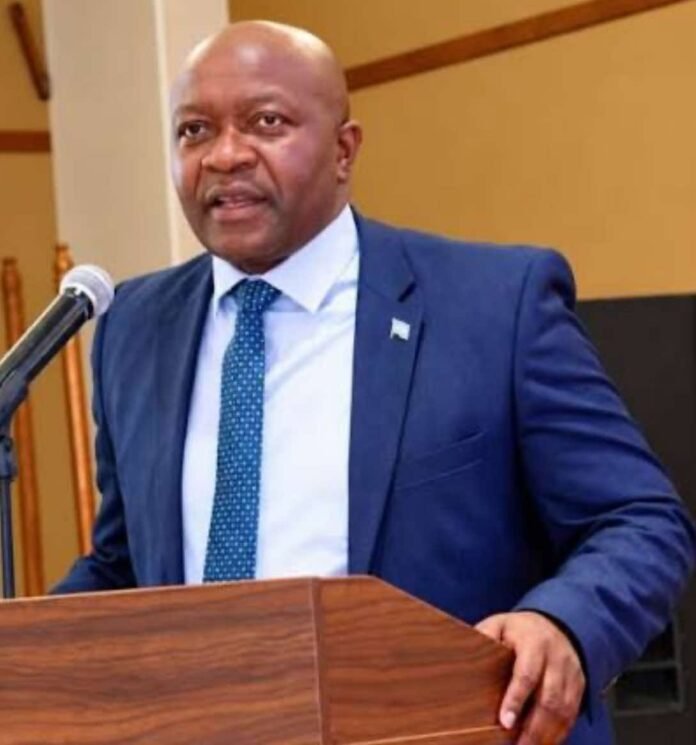

MONROVIA, LIBERIA-Liberia has started work on its 2027 National Budget, with Finance Minister Augustine Ngafuan warning ministries and agencies to make difficult choices as the government balances growing demands with limited resources.
The Ministry of Finance opened the 2027 Executive Budget Hearings on Thursday, October 1, beginning a process in which government institutions will account for their 2026 performance and outline their priorities for next year.
The hearings are expected to continue through October 9.
The opening session brought together the Ministry of Mines and Energy, the Special Presidential Project Coordinating Committee, and the Public Procurement and Concessions Commission.
But Minister Ngafuan’s message was not simply about how much money ministries want, but how much government can realistically afford.
Minister Ngafuan praised the Mines and Energy Ministry for exceeding its 2026 revenue target, and recognized the contribution of the Mining Sector to government revenue.
“You’ve done well. You’ve whetted the Liberian people’s appetite. They want us to do more,” he told officials.
But he cautioned that this year’s performance cannot simply be repeated in 2027.
A major concern is a one-time revenue inflow of about US$200 million, which helped strengthen this year’s collections but will not be available next year.
That means the government will have to find other ways to close the gap, while ministries and agencies continue to push for funding for their programs.
Minister Ngafuan asserted that government has to manage both sides of the equation—revenue and expenditure—and urged institutions to be realistic about what can be funded.
The finance minister said not every budget request can be approved in full. If an institution asks for more money than the government can provide, its leadership must decide which programmes are most important and where spending can be reduced.
“If you wanted 100 and we only gave you 70,” Minister Ngafuan said, the institution should determine how to adjust its plans while protecting its key activities.
He also called on institutional budget committees to play a stronger role in reviewing priorities and preparing realistic proposals before ministries appear before the national budget team.
The Ministry of Mines and Energy acknowledged the pressure on revenue-generating institutions.
Deputy Mines and Energy Minister for Operations said the ministry had “set the bar high” and understood the challenge of maintaining strong revenue performance in 2027.
He said a Mining Revenue Task Force involving the Mines Ministry, Finance and Development Planning, and the Liberia Revenue Authority is being organized to improve coordination and strengthen revenue collection.
The Central Bank of Liberia is also expected to participate.
The Deputy Minister said mining remains an important source of potential revenue, although increased production and investment do not always translate into immediate revenue gains.
He also acknowledged that the US$200 million one-off inflow would not return next year.
“We must do everything possible to be able to cover that gap,” he said.
The 2027 budget hearings will continue through October 9, with ministries and agencies expected to explain their 2026 performance and defend their priorities for the coming year.
The process will help MFDP determine how limited public resources should be allocated before the budget is submitted to the Legislature.