

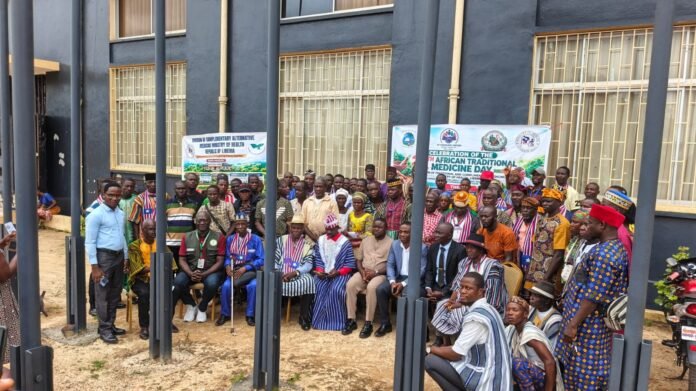

MONROVIA, LIBERIA-The Liberia Medical and Dental Council (LMDC) wants a comprehensive policy and regulatory framework to guide the practice of traditional medicine in Liberia.
LMDC Registrar General Dr. Augustus Garlet Quiah made the call recently during the 24th African Traditional Medicine Day Celebration in Sanniquellie, Nimba County.
The celebration was held under the theme: “Reflection on Research and Development Efforts of Traditional Medicine towards Achieving Universal Health Coverage in Liberia.”
Dr. Quiah said effective regulation would also strengthen partnerships among government institutions, academic and scientific researchers, and conventional healthcare and traditional medicine practitioners.
He noted that while conventional healthcare remains an essential component of the national health system, Liberia should also recognize the potential contribution of traditional medicine toward achieving Universal Health Coverage (UHC).
Dr. Quiah said such a framework must include establishing appropriate treatment limits and ensuring that practitioners do not make blanket claims that their remedies can cure all diseases and medical conditions.
He emphasized that sustained investment in research, policy development, capacity building, monitoring, and regulation is essential to ensuring that traditional healthcare practices are safe and appropriately integrated into Liberia’s healthcare system.
According to him, effective regulation would also provide an opportunity to strengthen partnerships among government institutions, academic and scientific researchers, conventional healthcare providers, and traditional medicine practitioners.
The LMDC Registrar General acknowledged the important role traditional medicine continues to play in healthcare delivery, particularly in rural and underserved communities where access to conventional healthcare services remains limited.
He noted that while conventional healthcare remains an essential component of the national health system, Liberia should also recognize the potential contribution of traditional medicine toward achieving Universal Health Coverage (UHC).
However, Dr. Quiah stressed that the advancement of traditional medicine must be accompanied by appropriate research, evidence-based approaches, professional capacity building, monitoring, and regulation to safeguard the public.
The celebration was organized by the Ministry of Health through its Division of Traditional, Complementary and Alternative Medicines and brought together traditional healthcare providers, government institutions, community stakeholders, researchers, and representatives of various health-related organizations.
It was held under the theme: “Reflection on Research and Development Efforts of Traditional Medicine towards Achieving Universal Health Coverage in Liberia.”
LMDC release added that as part of activities marking the 24th African Traditional Medicine Day Celebration, organizers officially launched the Nimba Medicinal Plants Garden, an initiative highlighting the importance of medicinal plants and traditional healthcare knowledge.
The organizers also certified traditional healthcare providers recognized for their contributions to Liberia’s healthcare service delivery through traditional medicine.
Meanwhile, local authorities have vowed to strengthen monitoring and take appropriate action against individuals who use radio stations and other public platforms to advertise traditional remedies and claim that their treatments can cure all diseases and medical conditions.
The LMDC maintains that responsible regulation, public education, research, and collaboration among stakeholders are essential to ensuring that traditional medicine contributes positively to Liberia’s healthcare system while protecting patients and the public from unsafe practices and misleading medical claims.