

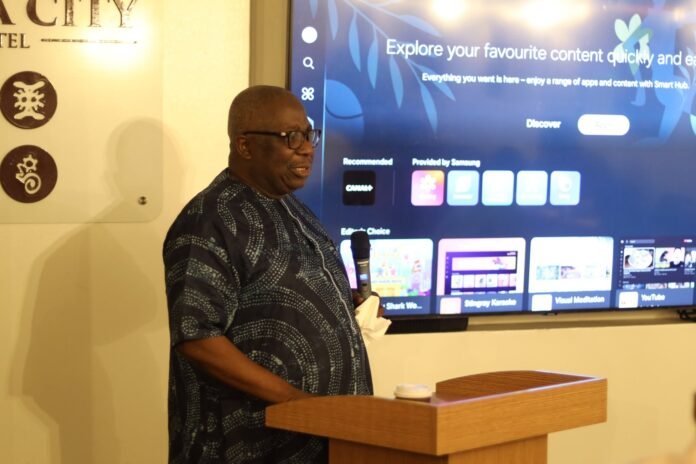

GHANA, WEST AFRICA-The Chief Executive Officer of the Centre for Journalism Innovation and Development (CJID), Dapo Olorunyomi, says the organization is working to strengthen environmental journalism across West Africa through specialized training.
Speaking during an interview with ELBC, Olorunyomi said,” The training was organized because too few journalists are reporting on environmental issues, despite the growing threats facing the region”.
He said human activities have become one of the biggest dangers to the environment, making it important for journalists to inform the public and hold decision-makers accountable through accurate reporting.
According to him, the workshop has equipped journalists with practical skills to investigate environmental issues and produce stories that can influence public awareness and government policies.
Meanwhile, the training brought together journalists from several West African countries, including Liberia, Ghana, Sierra Leone, Nigeria and the Gambia, to strengthen collaboration on environmental reporting.
At the same time, CJID has partnered with UNESCO to improve environmental journalism in West Africa.
Dapo Olorunyomi said,” The partnership was created because environmental challenges require greater public attention and stronger media coverage across the region”.
He explained that UNESCO and CJID are working together to build the capacity of journalists so they can report accurately on climate change, pollution, biodiversity loss and other environmental issues.
Olorunyomi said well-trained journalists can help communities understand environmental problems while encouraging governments to adopt better policies for protecting natural resources.
He described the partnership as an important step toward improving environmental reporting and promoting sustainable development across West Africa.
Meanwhile, the CJID has expressed concern over the growing risks faced by journalists covering environmental issues.
Chief Executive Officer Dapo Olorunyomi said,” Many environmental reporters experience threats, intimidation and other forms of retaliation while investigating stories involving powerful interests”.
He noted that CJID documents attacks on journalists through its Press Attack Tracker, which records cases involving media workers across the region.
According to Olorunyomi, environmental journalists deserve stronger protection because they play a critical role in exposing activities that harm communities and natural resources.
He called on governments and other stakeholders to create a safer environment for journalists to carry out their work without fear of harassment or violence.
Olorunyomi also called on citizens across West Africa to take greater responsibility for protecting the environment.
He said,” The region is blessed with rich forests, rivers, wetlands and other natural resources that must be preserved for future generations”.
He warned that human activities are placing increasing pressure on the environment and called for urgent action from governments, communities and individuals.
Olorunyomi stressed that protecting the environment is not the responsibility of journalists alone but requires the involvement of every citizen.
He expressed hope that the environmental journalism workshop would inspire more people to support conservation efforts and promote sustainable development throughout West Africa.