
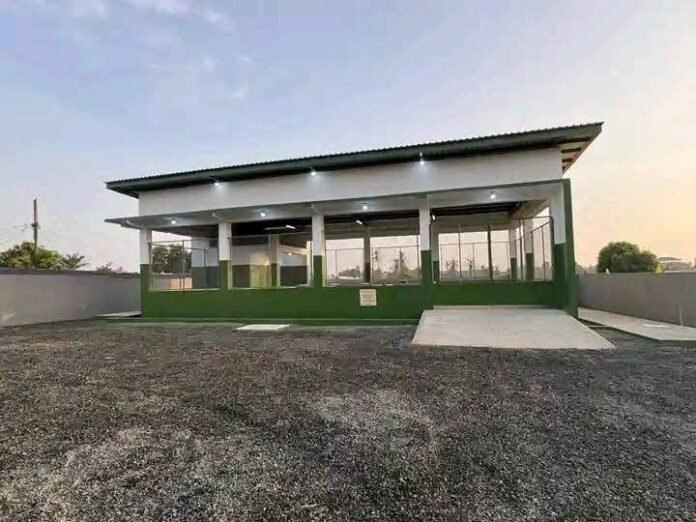

MONROVIA, LIBERIA-The Environmental Protection Agency (EPA), in collaboration with the Monrovia City Corporation (MCC), the Liberia Water and Sewer Corporation (LWSC), and several development partners, has officially launched a state-of-the-art organic composting facility in Fiamah, Montserrado County.
The initiative is aimed at strengthening waste management systems, reducing environmental pollution, and promoting sustainable urban agriculture.
As part of the project, community-based organizations will play a critical role by collecting food waste and other organic materials from households and transporting them to the facility for processing into compost.
The launching ceremony brought together a wide range of stakeholders, including representatives from the EPA, MCC, the Ministry of Finance and Development Planning, LWSC, the Liberia Business Association, civil society organizations, private sector actors, and international partners.
The Project is backed with technical and financial support from the international community, particularly the Government of Canada, through the MRV for Climate Action Project in Liberia.
The new plant is designed to help the city of Monrovia transition from open dumping to organized waste recovery and recycling.
Providing an overview of the initiative, Madam Vermo Lloyd, Project Lead, highlighted the importance of partnership, community participation, and innovation in addressing Liberia’s growing waste management challenges.
She noted that the project is designed not only to manage waste but also to create value through the production of organic compost for farming and landscaping.
“The project has, over time, observed that organic waste, especially from markets and community can be transformed into valuable resources that can contribute to agriculture, reduce greenhouse emissions, and also create opportunities for farmers to have fertilizer for their farms.” Madam Lloyd said.
Speaking at the commissioning, EPA Executive Director, Dr. Emmanuel Yarkpawolo, described the facility as a landmark achievement in Liberia’s environmental sector. He emphasized that the project represents more than just infrastructure.
“This facility reflects a bold national commitment to transforming how we manage waste in Monrovia and across Liberia,” Dr. Urey-Yarkpawolo stated.
He said, “It will significantly reduce the burden of waste in our city while converting organic materials into valuable compost that supports agriculture and urban greening.”
Dr. Urey-Yarkpawolo further disclosed that Green Guard Eco Solution Incorporated is advancing plans for a waste-to-energy project that will convert municipal waste into cooking gas, offering an alternative energy source for households. He noted that these initiatives align directly with the sanitation component of the Government’s ARREST Agenda for Inclusive Development.
According to him, improving waste management systems will not only protect public health and the environment but also generate green jobs and economic opportunities for Liberians.
Delivering his keynote address, Monrovia City Mayor John Siafa painted a sobering picture of the current sanitation crisis. He revealed that the city’s main landfill is over-capacitated, holding more than 60,000 metric tons of waste piled over 20 meters high.
“Sanitation in Liberia is a national emergency,” Mayor Siafa declared. “It requires urgent, coordinated, and sustained action from government, communities, and our partners.”
He described the composting facility as a turning point in the country’s approach to waste management.
“This initiative marks a shift from dumping to processing, from waste to value, and from crisis to opportunity,” he said.
Mayor Siafa also noted that approximately 43 percent of Liberia’s waste is organic, making composting a practical and cost-effective solution.
He stressed that the facility will help reduce operational costs associated with waste disposal while creating employment opportunities, particularly for youth and community groups.
He further disclosed that the government is developing broader strategies to address waste management challenges across Monrovia and other parts of the country.
As part of the program, Assistant Finance Minister for Development Planning, Wellington Barchue, reaffirmed the government’s commitment to increasing budgetary support for sanitation and waste management initiatives, especially in the 2027 budget, recognizing their importance to national development.
Minister Barchue urged officials of the project to go beyond the composting facility and create a medium where plastic waste can be transformed into economic activities that will provide more jobs for Liberians.
One of the key partners to the plant is the Liberia Water and Sewer Corporation. At the event, LWSC Deputy Managing Director for Administration, Wilson Gaye, also expressed strong support for the initiative, emphasizing the link between proper waste management, clean water systems, and public health.
For their part, the Canadian Government, through its representative Chris Godlove, underscored its commitment to supporting climate resilience and sustainable environmental practices in Liberia.
He praised the collaborative effort among government institutions, local communities, and private-sector partners, noting that the project serves as a model for inclusive and environmentally responsible development.
Community-based enterprises and other key sector stakeholders present at the event also pledged their support, underscoring the private sector’s role in scaling up waste management solutions and promoting environmental sustainability.
The Fiamah composting facility is expected to serve as a pilot for similar initiatives nationwide, marking a significant step toward a cleaner, greener, and more sustainable Liberia.