

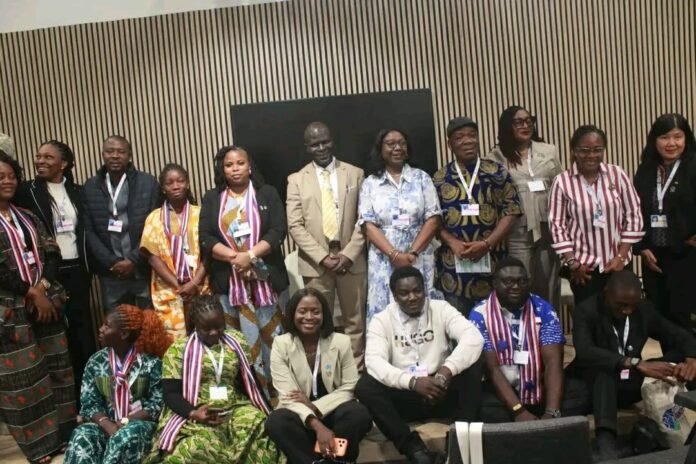

TURKEY- The opening of the 31st Conference of the Parties to the UN Framework Convention on Climate Change (COP31) officially kicked off on Monday, November 9, 2026.
It brings together world leaders, government representatives, climate experts, development partners, civil society organizations and young advocates from Africa and Latin America.
Liberia has used the opening day of COP31 to advance discussions on sustainable agriculture, youth participation, climate resilience and equitable natural resource governance, as the country seeks stronger international partnerships to address the growing effects of climate change.
Through its national pavilion in Antalya, Türkiye, on Monday, November 9, 2026, the Liberian government hosted three major side events, with discussions placing particular emphasis on the connection between climate change and food security, the need to equip young people to lead agricultural transformation, and the importance of responsible natural resource management in promoting peace and sustainable development.
The first engagement, titled “Agroecology and the Future of Youth in Africa,” brought together young agricultural advocates to examine how sustainable farming practices can help Africa respond to climate change while creating employment and economic opportunities for its growing youth population.
The panel featured Sepiso Ikasaya, Co-Founder and Executive of Tri Harmony Climate Network, Zambia; Abba Wherdaigar, Executive Director of YUGNET-Liberia; Sebastian Pedraza, Global Engagement Manager of Young Professionals for Agricultural Development (YPARD), Colombia; and Hallelujah Solomon, COP32 Road Map Coordinator from Ethiopia.
The discussion was moderated by Ezekiel Nyanfor of ActionAid Liberia.
The discussion reflected a broader continental concern that young people must be treated as active participants in agricultural development rather than merely beneficiaries of government and development programs.
The engagement highlighted the need for stronger collaboration among agriculture, environmental and health institutions, particularly as changing weather patterns, droughts, flooding and other climate-related hazards threaten food production and public health.
The second side event, “Cultivating Climate Resilience: Climate-Smart Agriculture,” examined how climate change is affecting agricultural production and why farming communities need practical adaptation measures to protect their livelihoods.
The panel included Z. Elijah Whapoe, Coordinator of Liberia’s National Climate Change Secretariat; Dr. Wiyata Tamara Diggs of the Ministry of Health; and Atty. Salimatu Gilayeneh, Team Lead of the Inclusive Green Growth Pillar Five at UNDP Liberia.
The engagement highlighted the need for stronger collaboration among agriculture, environmental and health institutions, particularly as changing weather patterns, droughts, flooding and other climate-related hazards threaten food production and public health.
The discussions pointed to the importance of climate information, early warning systems, climate-resilient farming techniques and coordinated government interventions in helping farmers make informed decisions and prepare for changing weather conditions.
The third side event, “Climate Resilience and Equitable Natural Governance for Sustainable Peace,” shifted attention to the relationship between environmental protection, resource management and peacebuilding.
The panel brought together Dr. Estherine Lisinge-Fotabong, Director of Agriculture, Food System and Environmental Sustainability at AUDA-NEPAD; EPA Executive Director, Dr. Emmanuel Urey-Yarkpawolo; and Grand Bassa County Superintendent, Karyou Johnson.
The engagement examined how competition over land, forests, water, and other natural resources can create tensions when communities are excluded from decision-making or denied access within their localities.
Beyond the three engagements at the Liberia Pavilion, Dr. Urey-Yarkpawolo participated in a high-level discussion at the Climate Mobility Pavilion under the theme “The Global Principles: From Global Consensus to Regional Priorities.”
The discussion focused on translating international principles into regional responses, particularly for countries in West Africa facing coastal erosion, drought, flooding, and other climate-related threats.
In his remarks, the EPA Executive Director proposed a West African Climate Mobility and Resilience Program to address climate-induced displacement and protect vulnerable communities across the region.
Dr. Yarkpawolo cited coastal erosion in Lower Buchanan, Liberia, and drought-related livelihood challenges in northern Ghana as evidence of the growing impact of climate change on communities.
He said:” The proposed program would strengthen early warning systems, protect livelihoods, support coastal restoration and promote dignified relocation for communities facing serious climate threats”.
Dr. Yarkpawolo also called for dedicated regional financing and stronger partnerships, stressing that climate action must protect families, restore livelihoods and reduce tensions in affected communities.
In August 2026, the EPA also convened a national Climate Mobility Deep Dive Consultation involving representatives from Montserrado, Margibi, Grand Bassa and Rivercess Counties, alongside government institutions, development partners, traditional leaders, civil society and youth groups.
The consultation sought to generate evidence and practical recommendations for addressing the relationship between climate change and human movement in Liberia.
The proposed West African program therefore represents an effort to expand the discussion beyond national borders, recognizing that climate-related displacement requires cooperation among countries experiencing similar environmental challenges.
For Liberia, the pavilion engagements provide an opportunity to highlight national priorities, strengthen international cooperation, and advocate for increased support to address the country’s climate vulnerabilities.
Through discussions on Agroecology, youth leadership, climate-smart agriculture, natural resource governance, and climate mobility, Liberia is seeking to position climate action as not only an environmental priority but also an important component of food security, economic development, social stability, and national resilience.